Giving the Neuralyzer an interface
Men In Black's memory-wiping device has no screen — just dials and a flash of light. I spent a semester treating it like a real product: studying its users, mapping its tasks, and redesigning it around a constraint the films had been staring at for three movies.
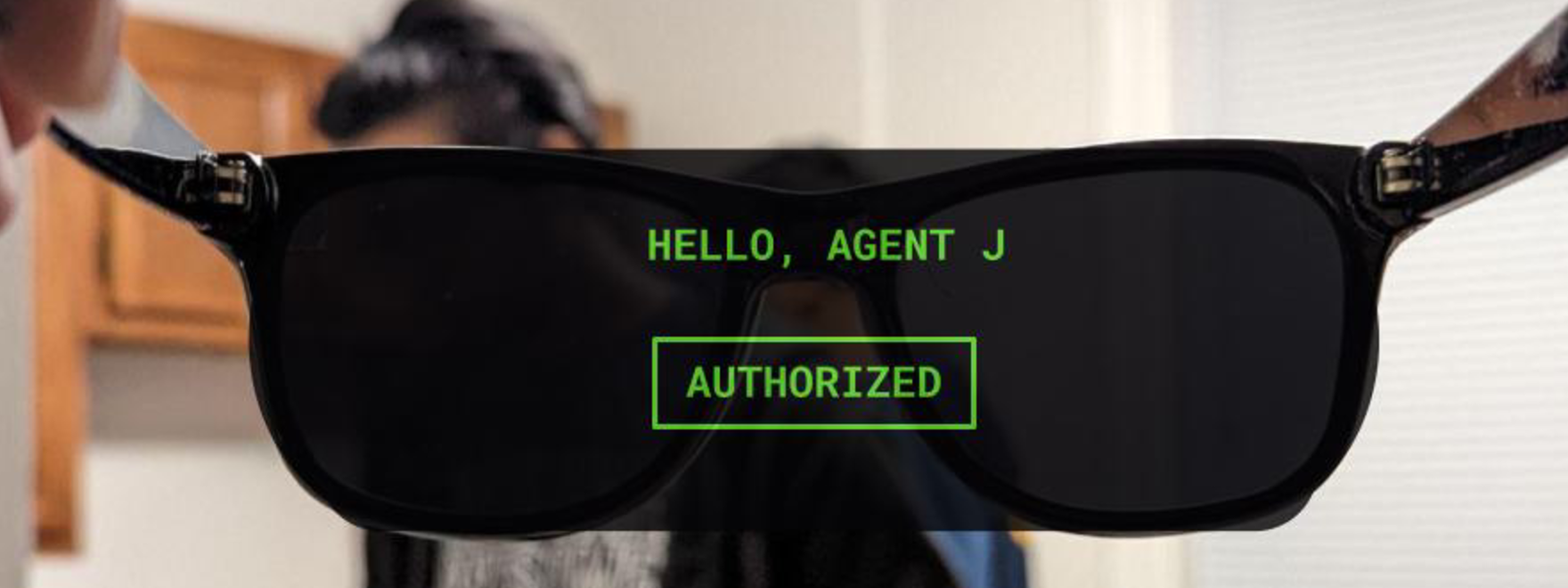
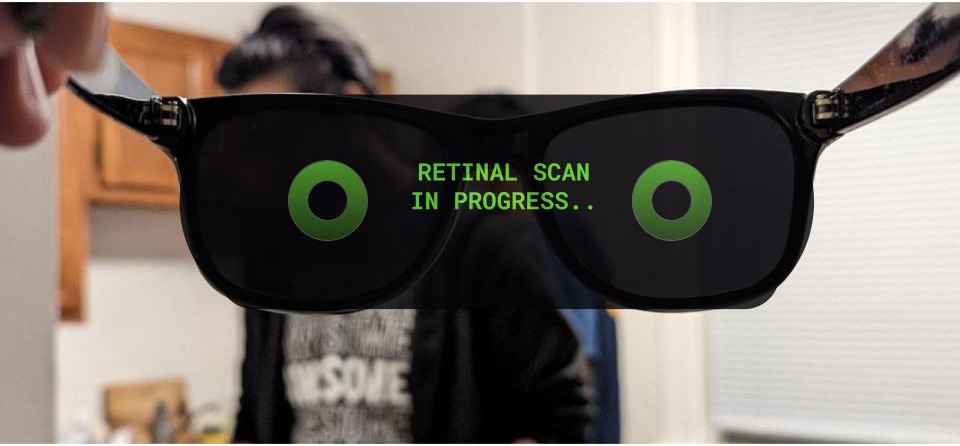
IN PROGRESS..
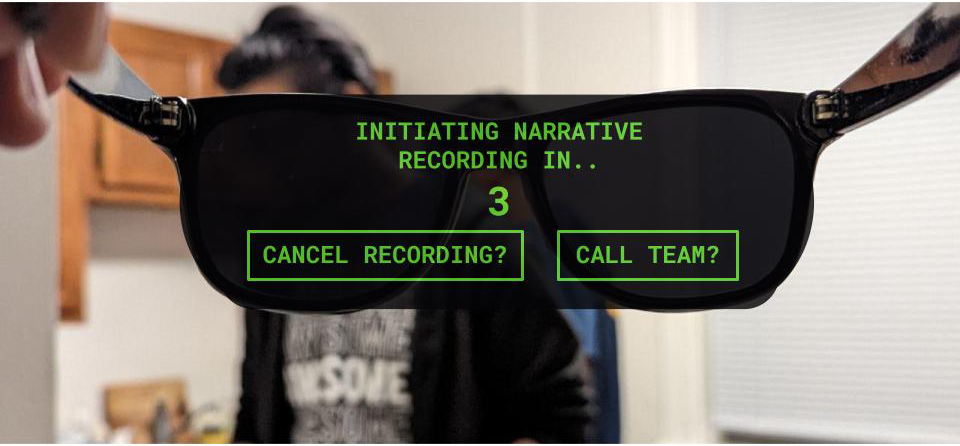
RECORDING IN..
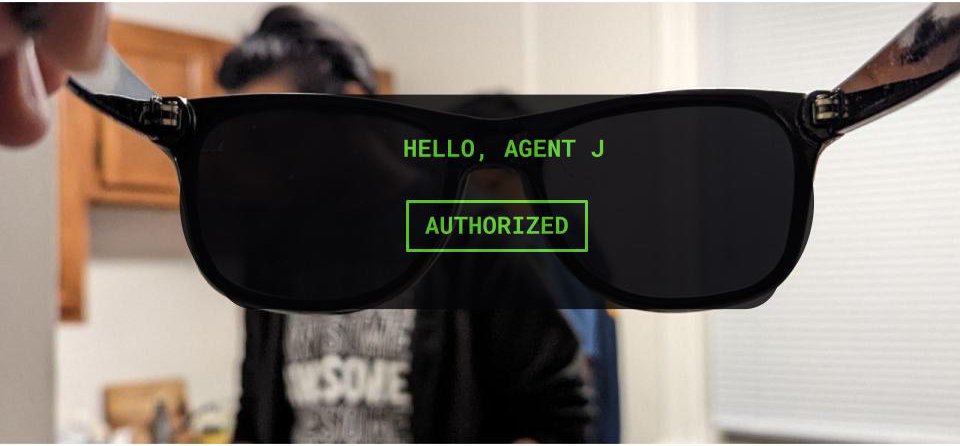
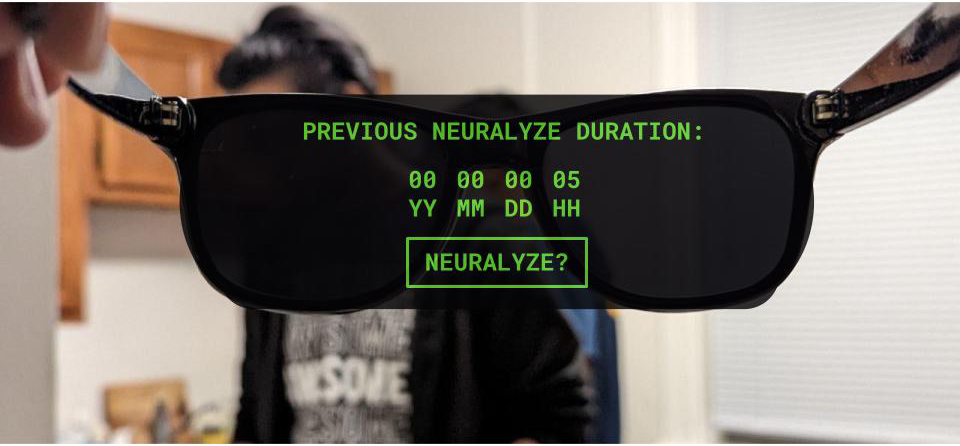
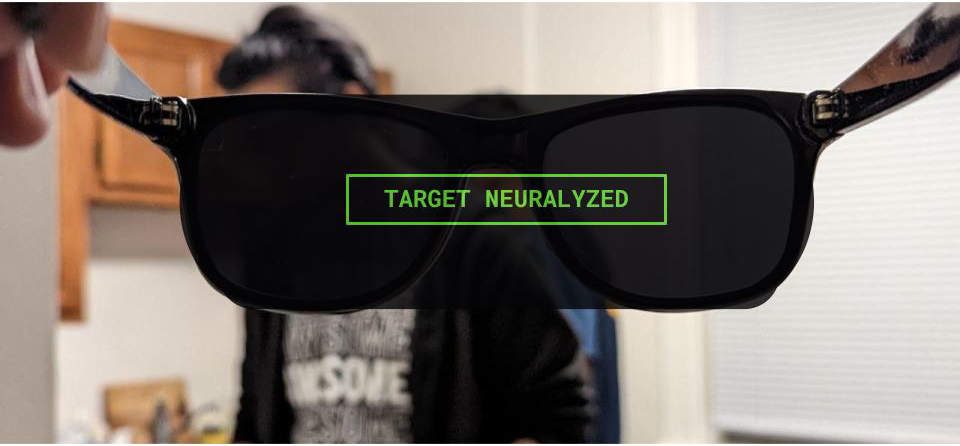
Rebuilt in the browser from the prototype flow. The duration digits are tappable. The lenses are the display — everything an agent needs sits on a surface they were already wearing.
MIB's Neuralyzer:
A device with no interface
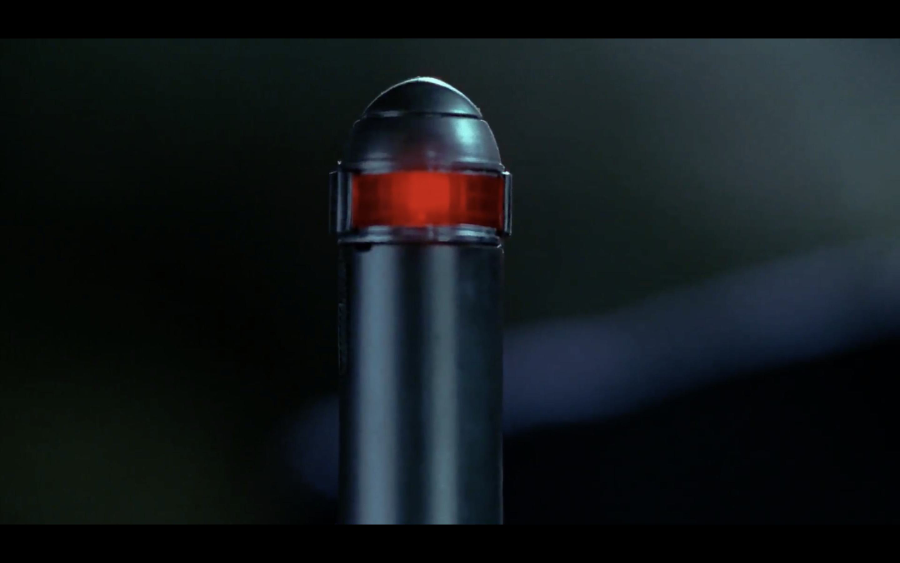
One red "neuralyzing" flash erases some span of memory that the agent selects for the often-unaware subjects. The span is set by dials on the barrel. False memories are narrated afterward to replace the erased memory. Since the flash affects anyone who sees it, the agent always wears Ray-Ban-style dark glasses first.
So the actual product is two objects and a script the user has to hold in their head. That's where I started looking.
Researching a user who doesn't exist
Three films, treated as field data.
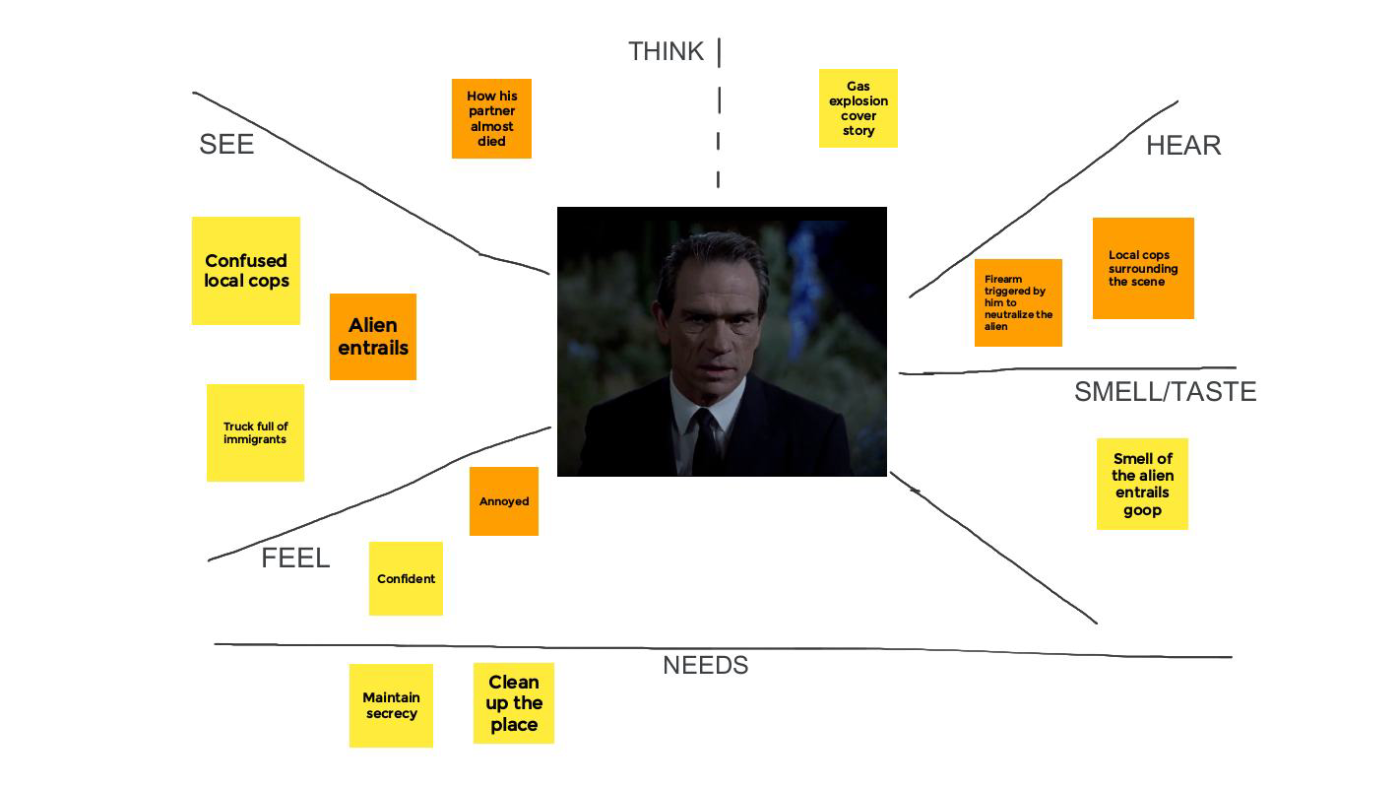
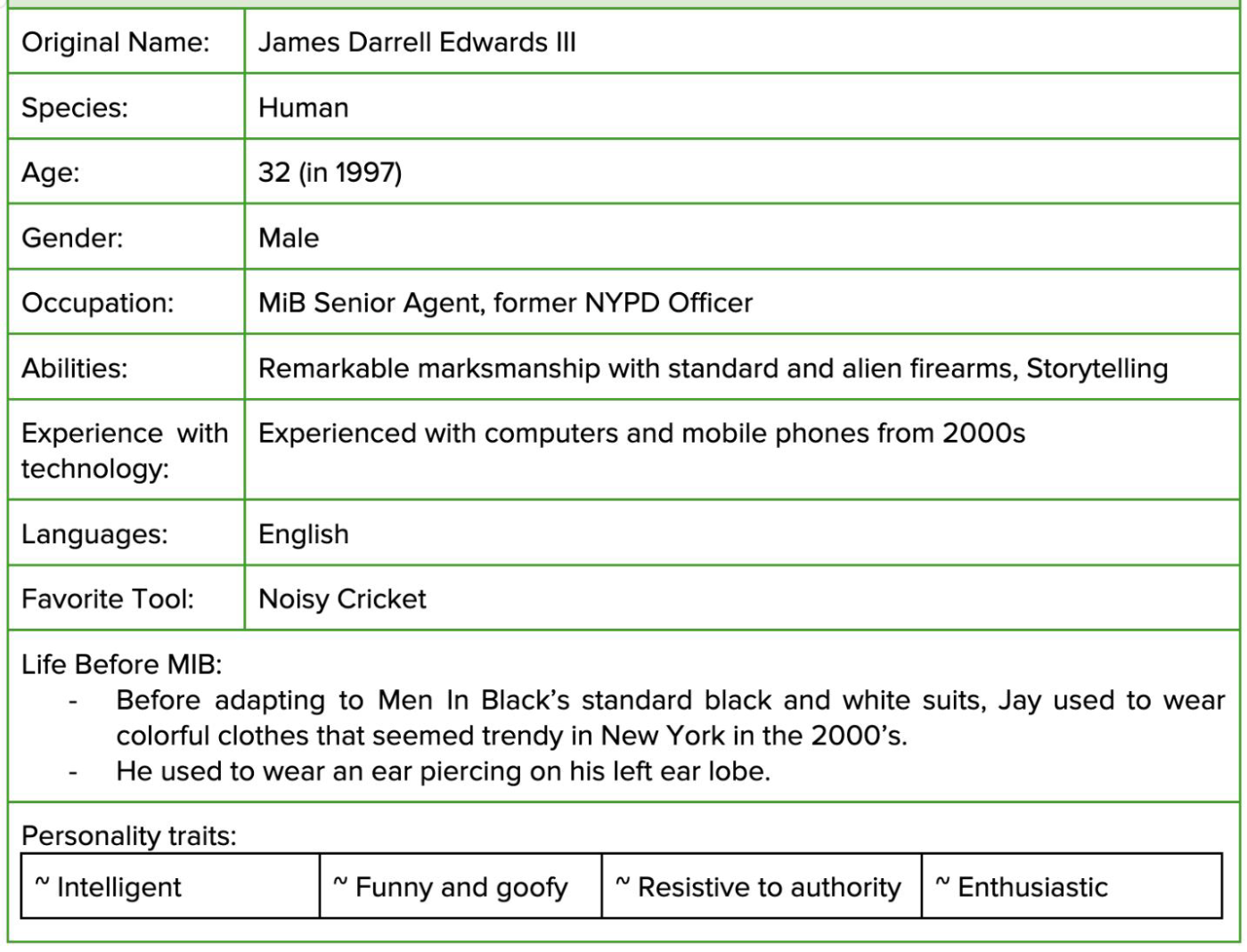
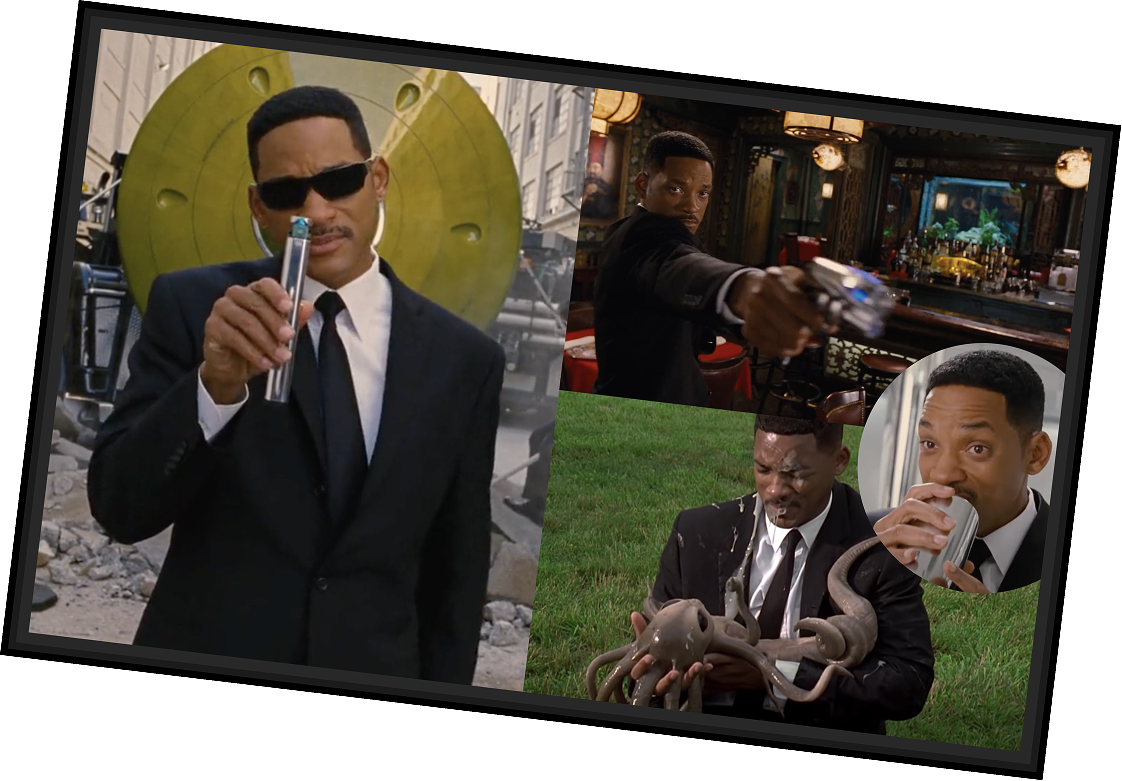
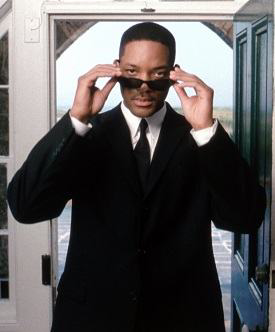
Funny & goofy · Enthusiastic · Resists authority · Intelligent
Stills © Columbia Pictures (1997), academic reference
Then I acted it out
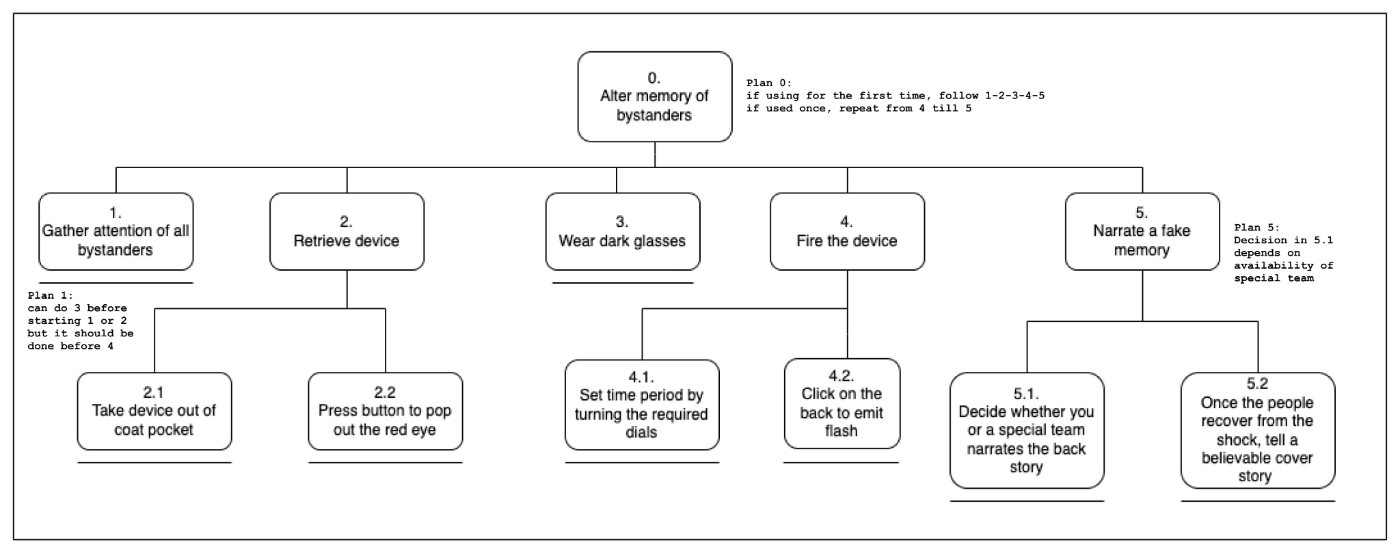
I stopped trusting the task list once I acted the scene out. On paper the order looks clean; standing there with a device in one hand and glasses in the other, the real problem was that both hands were busy at the exact moment the agent needs to control a room. That's the constraint I designed against.
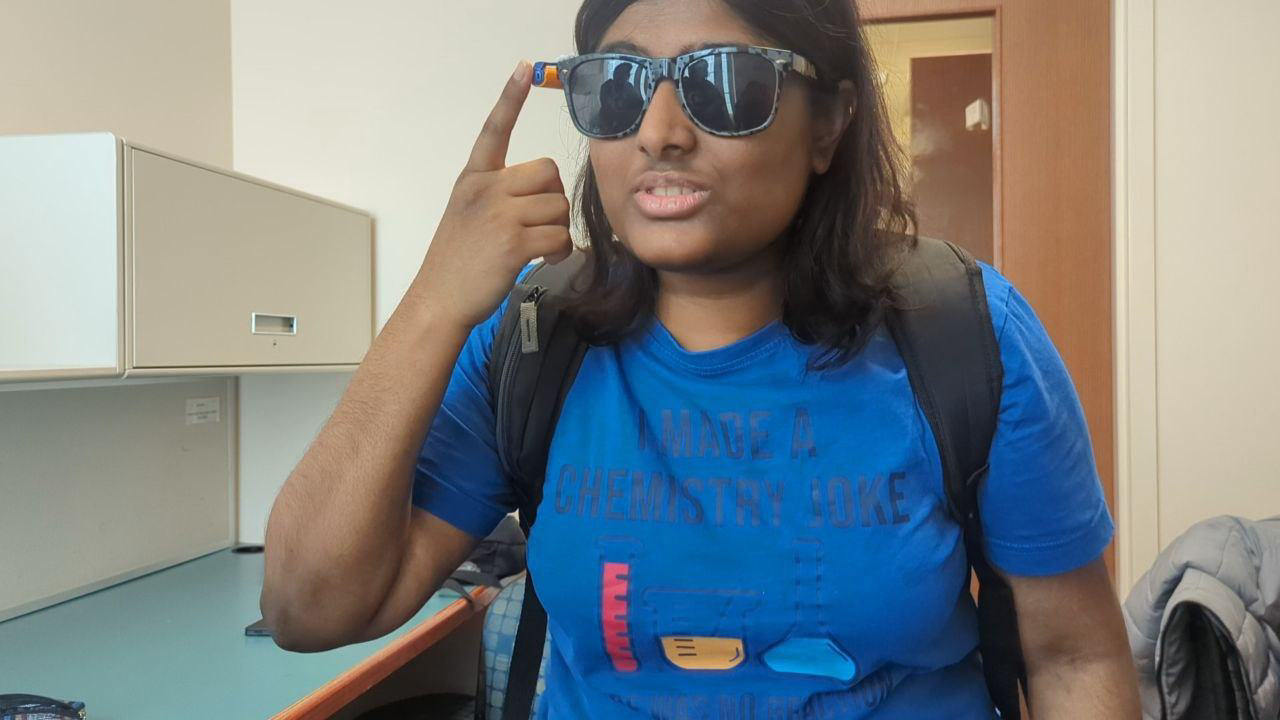
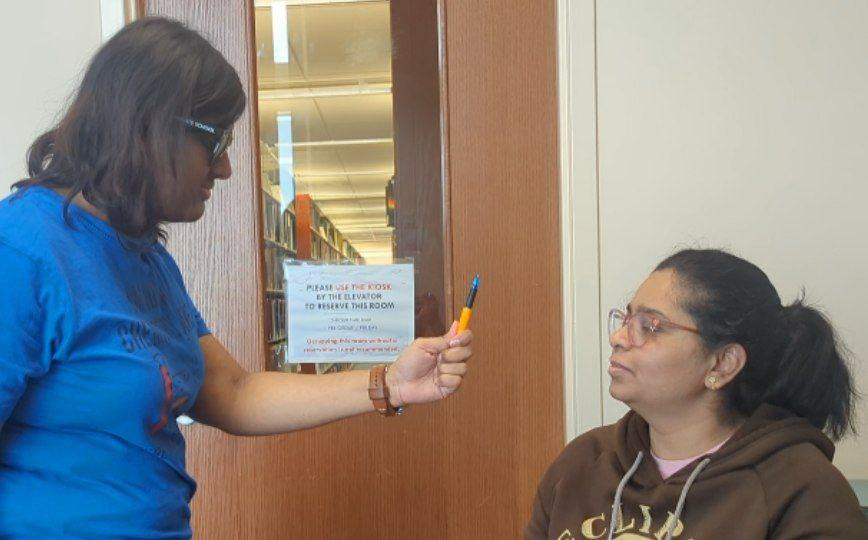
If the dark glasses are always needed to use the device — why not put the device inside the glasses?
The realisation that reframed the project
The films treat the sunglasses as a prop. The task analysis says they're a required step. Once the glasses are mandatory equipment, a second hand-held object is pure overhead — and the interface I'd been sketching didn't need a new surface, it needed to move onto one the user was already wearing.
Twenty ideas before I let myself pick one
I forced myself to ten before refining any of them, because my first sketch was the obvious one and I didn't want it winning by default. Half of what I drew was unusable — that was the point.
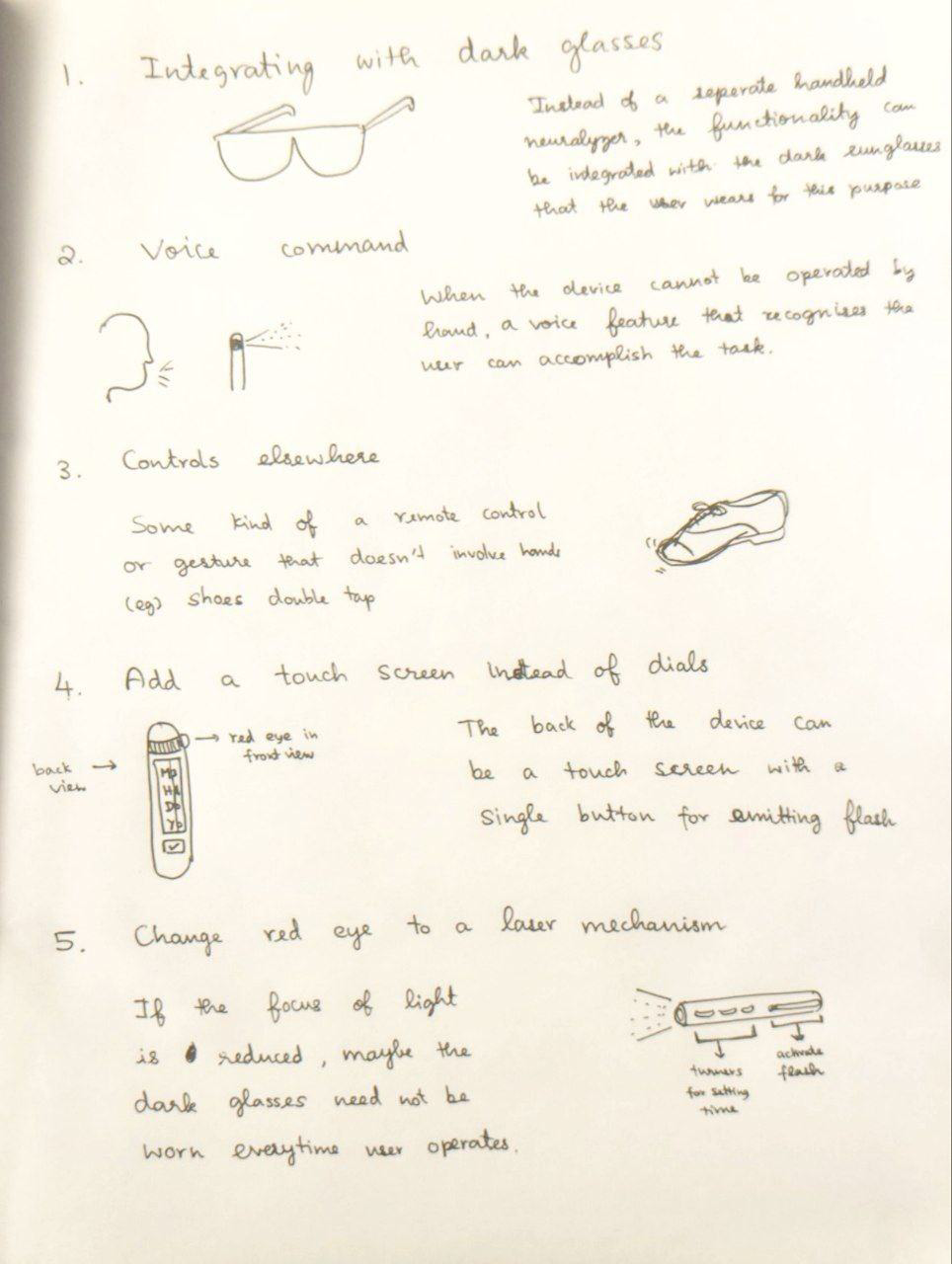
Paper first, on purpose
- Lens-shaped paper, drawn on directly — peers wore it and narrated what they expected to see.
- Back to the HTA to decide which tasks earn a screen. Most didn't.
- Black lens, green type — the one combination legible through a dark lens.
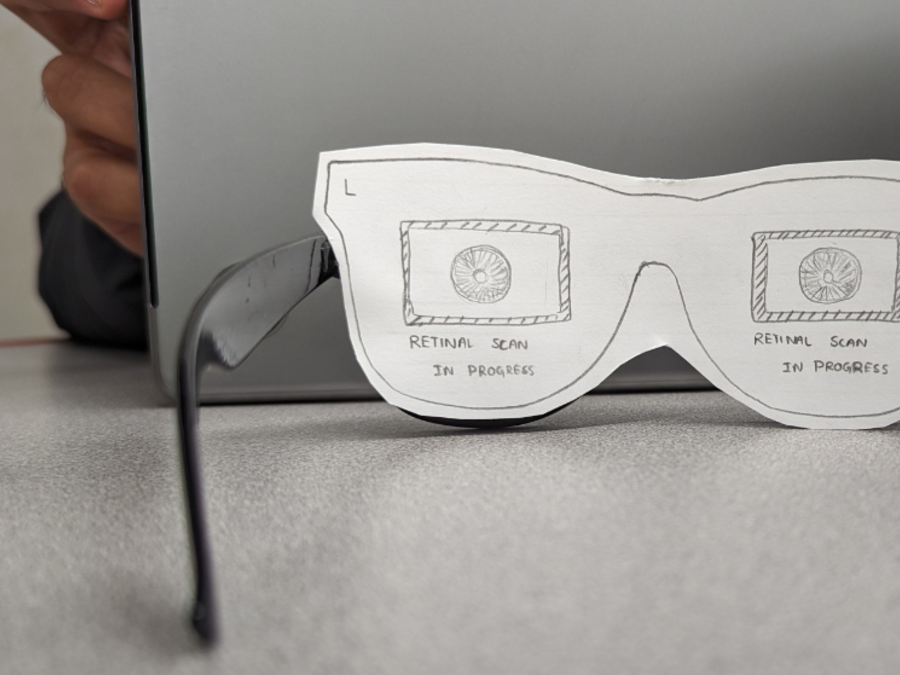
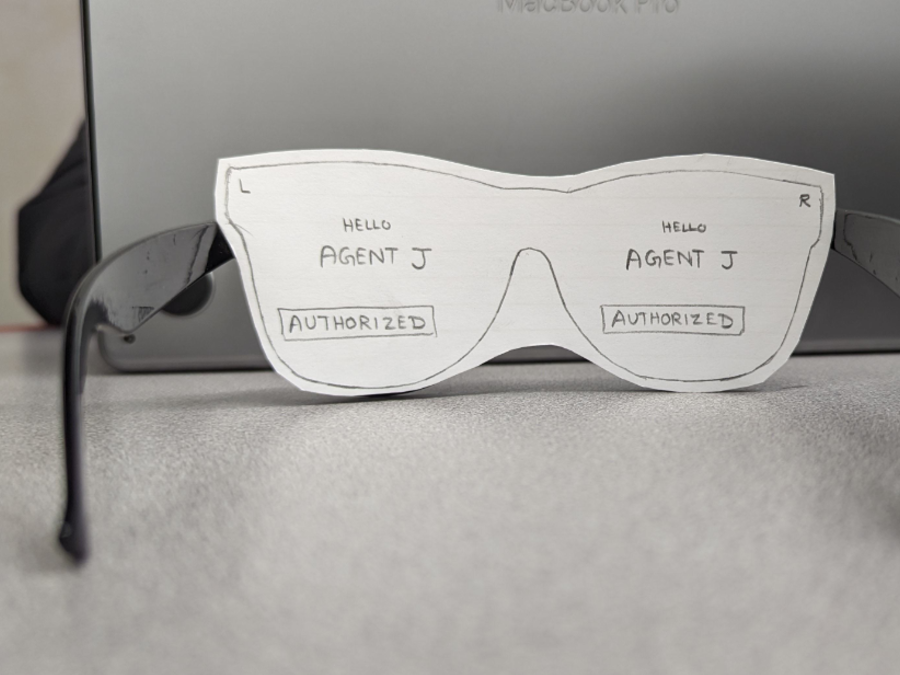
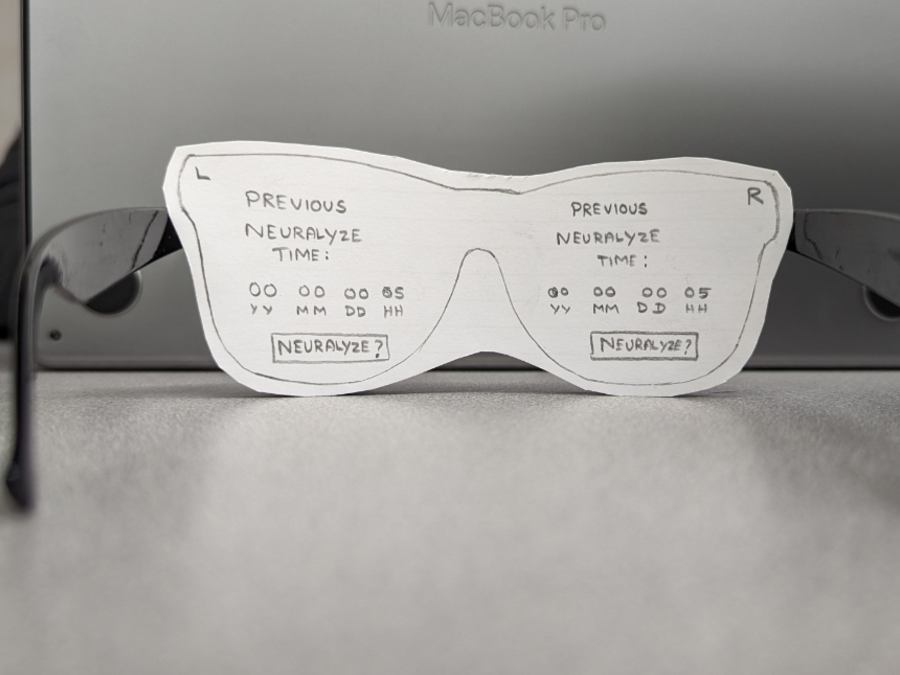
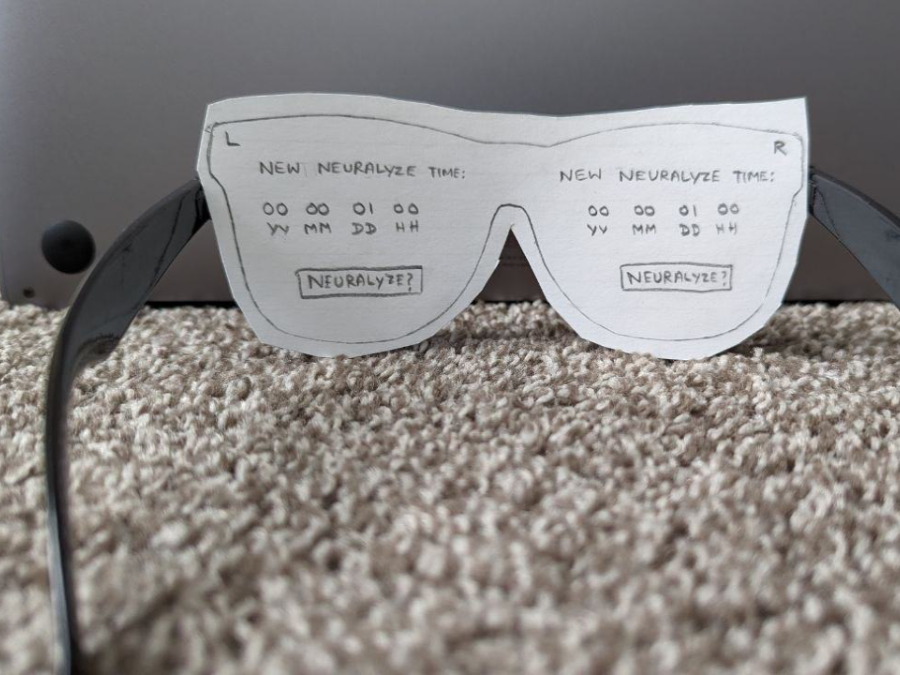
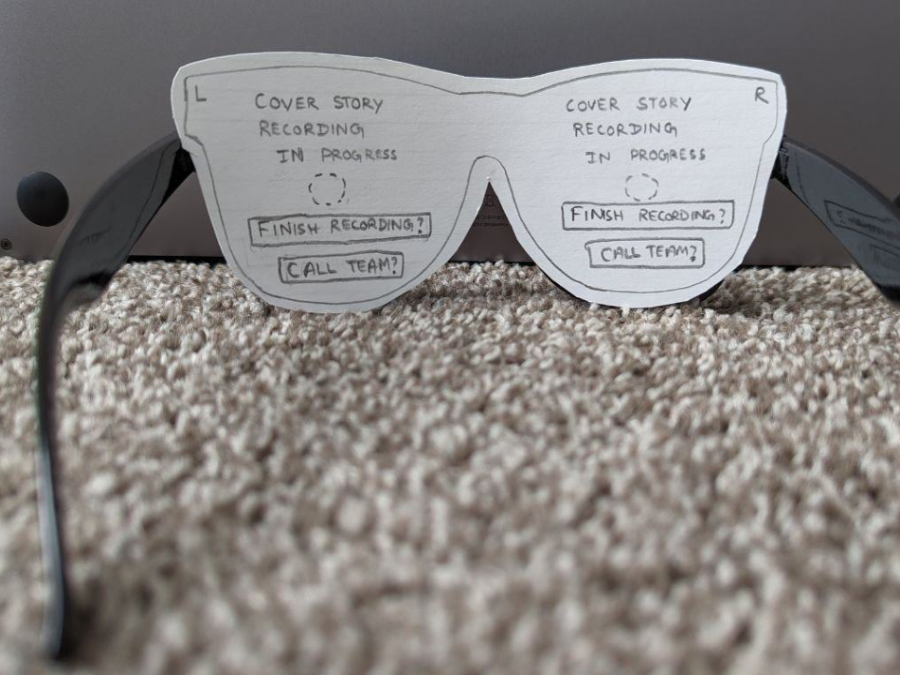
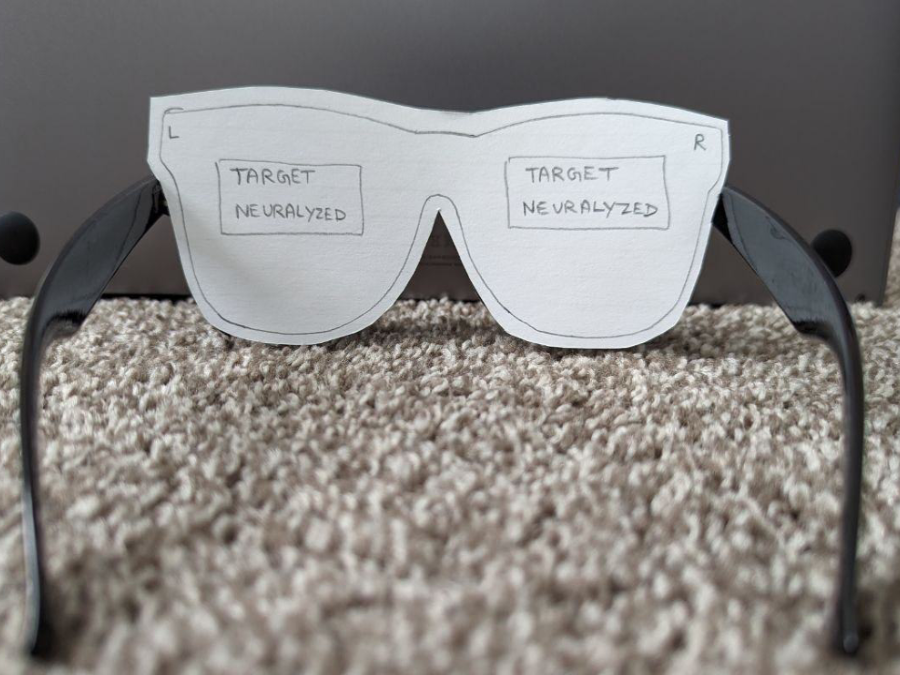
Six screens, one flash
One decision per screen.
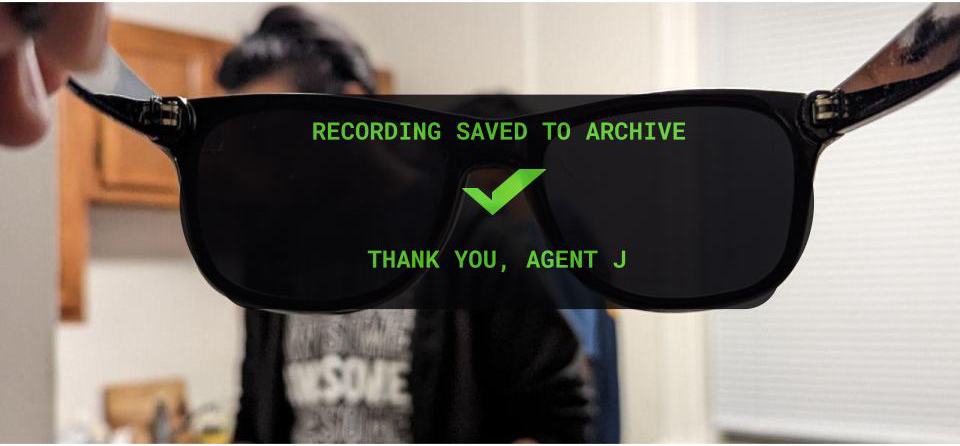
Shot through the real glasses in Google Slides; carried into Adobe XD for the interactive build.
One word broke
I demoed the prototype to the class. The flow held; the last screen didn't.
"Archive of what, for whom?"
I'd named the screen from the system's side. The agent doesn't file an archive — they file a story about a person.
Ideas for next iteration
- 01Whose memory, what window, what story — can the next agent retrieve the case from the record alone?
- 02Does the recording countdown give an agent time to think, or just time to panic?
- 03Both need the same test: hands full, one shot, someone watching.